One can hardly imagine a person who enjoys constant quarrel with an intrusive neighbor. Especially when the neighbor has thirty times more population, two-hundred-and-fifty times larger territory and spends one-hundred times more money on a twenty times bigger army. It is even more likely when the neighbor is an energy superpower and, although not the strongest global power, a potent force to be reckoned with by the world’s strongest ones.
Hence, the attitude of the Georgian population, repeatedly confirmed by public opinion polls, is natural: nearly half disapprove of the government policy toward Russia. It would be surprising if Georgians did not disapprove given that two-third of them perceive Russia as a looming threat and believe the government is failing to deal with that threat.
In such an environment, it is also not at all surprising that almost all opposition parties, even those entertaining groundless ambitions, try to capitalize on the issue of Russia. They promise voters they will normalize relations with our Northern neighbor after they come to power. That aim is itself laudatory. The problem with it is that none of those opposition parties has or can specify the steps they will take to achieve it. We do not know how – and more importantly, at what cost – relations with Russia will be “sorted out.” What exactly will Georgia have to concede and what will it get in return from Russia?
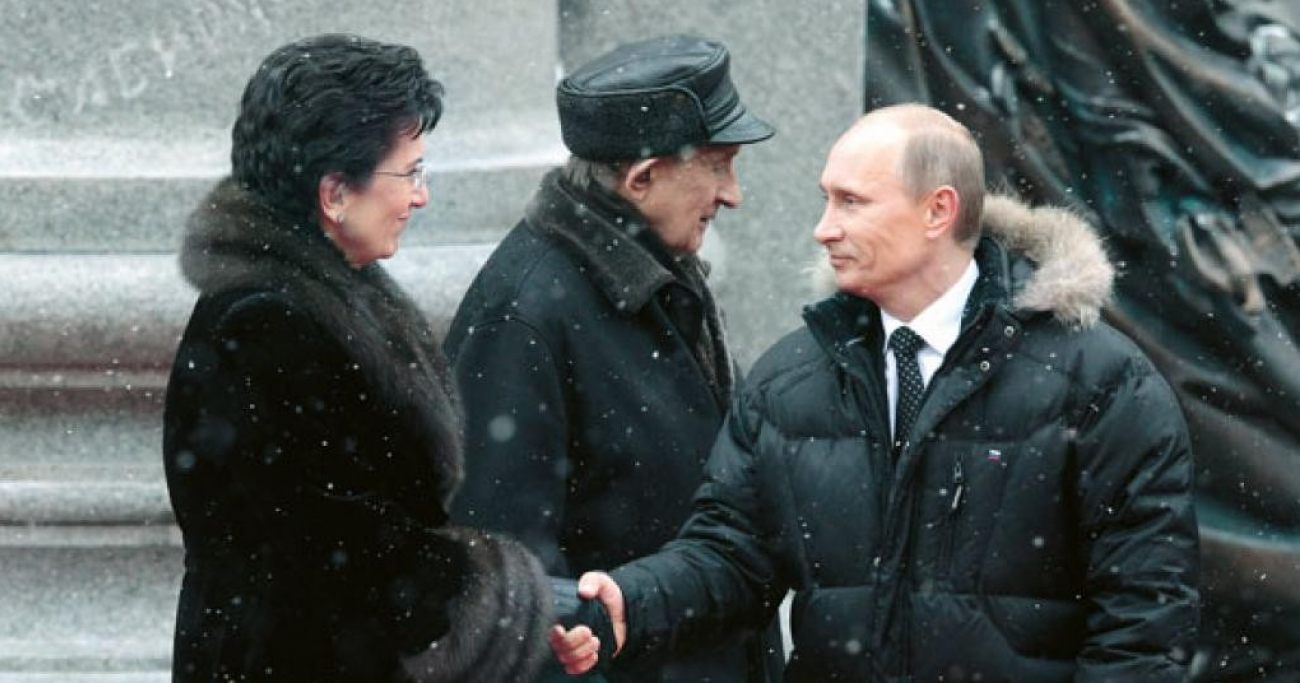
It is a fact that the population wants to tackle the Russian threat, but it is not willing to do so at any cost whatsoever. The examples of Nino Burjanadze and Zurab Noghaideli illustrate that perfectly well – by standing next to Vladimir Putin they merely hastened their political suicide.
We also see that the desire of Georgians to normalize relations with Russia has not diminished their wish to integrate into NATO and the European Union. Accession to these organizations is supported by three-quarters of the population, according to recent surveys. It is obvious that the Georgian people do not want to abandon the country’s Western political course in exchange for “sorted out” relations with Russia.
Viewed in this light, it is not advantageous for any domestic political force to openly embark on a pro-Russian course and away from the Western orientation. Some opposition political parties nonetheless question the expedience of NATO aspirations. For example, leaders of the National Forum instantly commended Bidzina Ivanishvili’s “policy of balance” (as they put it). Another party, the Labor Party, acts under the slogan “Neither Russia nor NATO” and sees a policy of neutrality as the best solution for Georgia. It is interesting that neutrality was the policy which the last Russian Ambassador to Georgia, Sergey Kovalenko, wished for Georgia as well. At a press conference in 2007, Kovalenko declared that he would like to see Georgia as a “sovereign, democratic and neutral state.” We know very well how Russia truly felt about Georgian sovereignty and democracy.
Georgia has also experienced dire consequences of neutrality. The Democratic Republic of Georgia declared its neutrality on the basis of the Treaty of Moscow signed in May 1920. As a result, British troops left Georgia and Soviet Russia tolerated the existence of the neutral Georgian state for only nine months.
Neutrality did not spare Finland either from attack by the Soviet Union in 1939. When the aggressor failed to turn Finland red, it had no other way left but occupation and annexation of Karelia. Neutrality also has not proved a handy defense of sovereignty for Russia’s neighbors in the modern era. A good example is Moldova, which has enshrined the principle of neutrality in its Constitution since 1994 but is still unable to regain its breakaway territory of Transnistria.
It should be clear that neutrality is not a solution to challenges faced by Georgia. Declaring neutrality during the Kenya-Somalia conflict is one thing, but it is impossible to remain neutral when the very existence of the homeland, its territorial integrity and sovereignty are at stake. Not resisting an aggressor is tantamount to capitulation or collaboration – not neutrality.
Other politicians try to fit a square peg into a round hole when they advocate a policy of appeasement as a viable pro-Western course. They view NATO membership as a very distant or unattainable prospect. They think that, without saying “no” to the Atlantic Alliance, we should not push the process because that only irritates Russia. They believe integration into the European Union, not NATO, should be the top priority. That approach turns history on its head: Each of the post-Socialist states that became EU Member States did so via NATO. It is not clear what convinces some politicians that Georgia’s western integration could be accelerated in reverse.
In reality, Russia’s main problem is not with NATO; it is with the sovereignty of Georgia and other post-Soviet countries. Were it otherwise, the Kremlin would not have prevented neutral Moldova from restoring its territorial integrity; it would not have had problems with Ukraine’s “off-the-blocks” status or with anti-Western Belarus. Moscow, of course, is well aware that NATO expansion does not pose any real threat to Russia – the chance that the Atlantic Alliance would ever attack Russia is nonexistent. What worries Moscow most of all is the ultimate withdrawal of its former vassal from Russia’s sphere of influence. This is exactly what the integration of Georgia, Ukraine or any other post-Soviet republic into NATO means to Russia.
Many analysts – both inside and outside Georgia – explain Russia’s aggressive policy as manifestation of a psychological complex. They think that, in dealing with Russia, one must take into account national dignity and self-esteem. They draw a parallel between the diminished Russia of the 1990s and the defeated Germany after World War I. They believe that Putin’s revanchist politics are fed by an inferiority complex arising from Russia’s national humiliation in the 1990s. If that were indeed the psychological norm, then one must wonder why Germany did not develop that same complex after World War II.
It is the sovereignty of post-Soviet countries that most offends Russia’s dignity and self-esteem. It was painful enough for the Kremlin to digest the loss of the Baltic States. The independence of Georgia is considered even more acute because the Kremlin knows that Georgia’s ultimate withdrawal from the sphere of Russia’s influence will sooner or later trigger a domino effect in the post-Soviet space and significantly restrict the regional hegemony of Russia.
In addition to its “romantic”-imperialistic instincts, Russia is also motivated by energy interests that have become excessively politicized under Putin. With pipelines and raw product at its disposal, Russia’s ambitions are further fueled by its energy leverage over Europe. As it has demonstrated with its treatment of Ukraine, Russia will not shy away from flexing its energy might to attain its political aims.
The loss of South Caucasus would further weaken Russia. Caspian energy resources are now rivaling Russia’s in the European market. Moreover, because it lacks alternative pipelines, our Northern neighbor relies upon former Soviet republics as sources of cheap natural gas, which Russia transports via its pipelines to Europe for resale at a much higher price.
It is the combination of these and other factors that has prevented Russia and Georgia from finding a common language in which to communicate. Their failure of communication has existed for the past twenty years, even though each country has had three leaders during that period: Mikheil Gorbachev, Boris Yeltsin and Vladimir Putin in Russia; Zviad Gamsakhurdia, Eduard Shevardnadze and Mikheil Saakashvili in Georgia. These different leaders each embodied strikingly different ideologies and personal qualities, but not one of them succeeded in normalizing Russia-Georgia relations.
We know what happened to Gamsakhurdia: His fate was largely determined by Russia and partially by Georgians themselves. Shevardnadze was also unacceptable for Russia because, as rumor has it, Russian generals did not like him, could not “forgive” him for the fall of the Berlin Wall and staged terrorist acts against him. It was during Shevardnadze’s rule that ethnic cleansing in Abkhazia and South Ossetia took place; that Georgia was shelled and suffered casualties; that a visa regime was introduced. Now the name of Russia’s problem is Saakashvili. The Kremlin claims that it will not speak with the Georgian government until after Saakashvili has gone.
It is difficult for the majority of opposition politicians to resist the temptation to blame Saakashvili for the country’s deteriorated ties with Russia. They apparently hope that many today will not recall that Saakashvili, upon coming to power, extended a hand of friendship to Russia. His visit to Moscow in 2004 was one of his first state visits as President of Georgia. Back then, President Saakashvili was actually criticized by many in Georgia for his cordial statements in Moscow.
As might have been expected, the relationship between the new leader of Georgia and the entrenched leader of Russia soon deteriorated. Their enmity was to be expected not just because of their personal differences but even more because of the political course of each of their countries. By then, it was of great importance for Russia to prevent former Soviet republics from slipping out of its sphere of influence as the Baltic States had. Our Northern neighbor could not then and cannot now tolerate the statehood of former Soviet republics. One need only look to Viktor Yanukovych’s Ukraine and Alexander Lukashenka’s Belarus for proof. Ukrainian President Yanukovych halted talks on Ukraine’s NATO membership, declared Ukraine as a nonaligned state and extended the presence of the Russian fleet in Crimea. What he received in return were Putin’s demands to hand over Ukraine’s gas transportation system to Gazprom, to stop negotiations on any free trade agreement with the European Union and to join the Eurasian Union. As for the relationship between Putin and Belarusian President Lukashenka, we now witness a “cold war” between the two Slavic states.
Russia can only have enemies or slaves as its neighbors, U.S. diplomat and historian George F. Kennan observed at the close of World War II. That observation is still perfectly apt today. Naturally, it is not in the interest of Georgia to be either an enemy to or a slave of Russia. Unfortunately, that is the Russian state-of-mind and changing it is beyond Georgia’s capacity.
Some political leaders break under the weight of this choice. Others are not embarrassed to benefit under such circumstances. All of these opposition politicians try to sell their positions as farsightedness and try to convince us that a desired peace with Russia can be achieved only if they come to power. As Ronald Reagan once said: “There is no argument over the choice between peace and war, but there is only one guaranteed way you can have peace – and you can have it in the next second – surrender.”