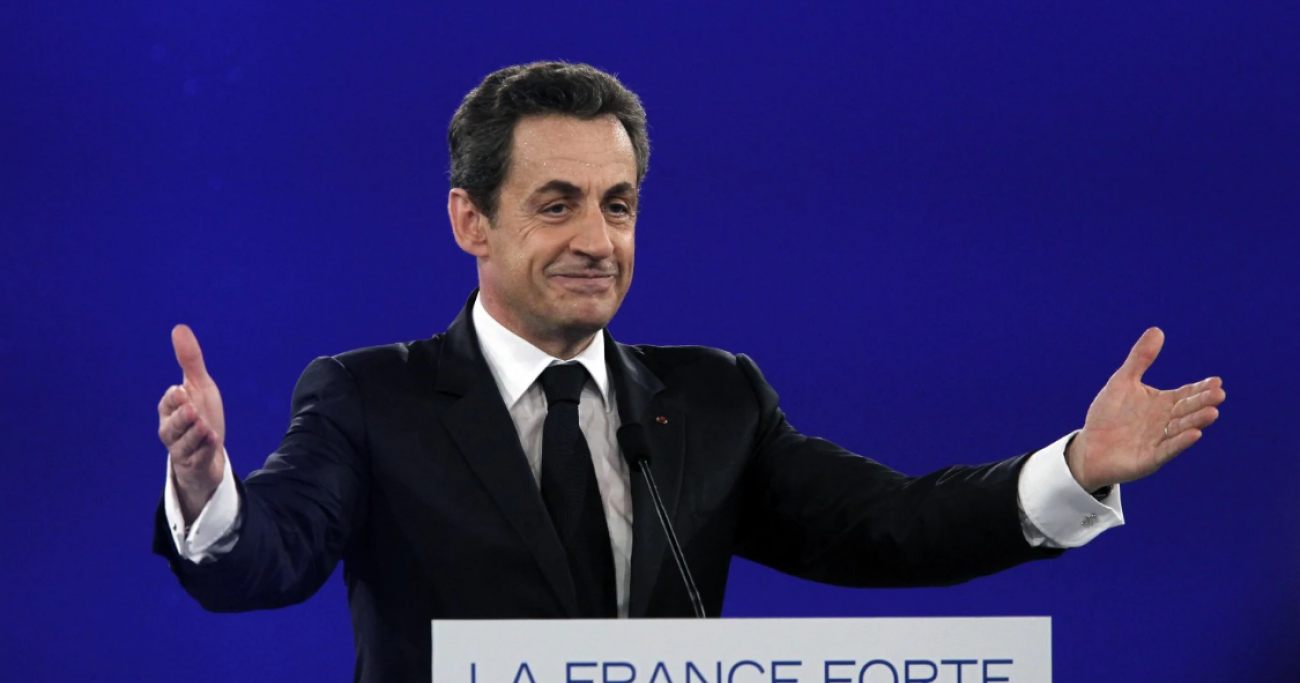
“With the name you carry and the results you get, you will never succeed in France,” Pal Sarkozy once dismissively told his young son Nicolas when the boy tried to impress him with achievements at school. The impoverished Hungarian aristocrat by then had been in Paris for several years. As he later told the British Telegraph newspaper, his mother urged him to flee his native country when Soviet forces entered Budapest after World War II: “Pal, you must leave Hungary because, if you don’t, you will find yourself in Siberia and we will never see you again.” Heeding his mother’s advice to head West, he made his way to France by way of Austria and the German town of Baaden Baaden.
Pal Sarkozy arrived in Paris penniless. He soon met and married the daughter of an influential doctor. The couple had three sons – Guillaume, Nicolas and François – but Pal walked out on his family when Nicolas was only four.
“What made me who I am now is the sum of all the humiliations suffered during childhood,” French President Nicolas Sarkozy once said. His father is finally proud of the results. “I arrived as a refugee, and I see my son president of the republic. Nicolas is a symbol of the accomplishment and success of the Sarkozy family in France,” Pal Sarkozy now acknowledges. The Hungarian immigrant’s family pride does not stop there; he pins hopes for the future of France on his grandson Jean Sarkozy. A member of his father’s conservative political party, Jean Sarkozy found himself entangled in a scandal in 2009 when the UMP (Union pour un Mouvement Populaire) party offered him a position as head of the public development agency for La Défense, the largest business district in Europe. Public reaction was quick and negative: Sarkozy was accused of blatant nepotism. The French could not understand what else might possibly qualify the 23-year old law student for such a prestigious position. Public pressure was so intense that Jean Sarkozy was forced to renounce the offer in a matter of days.
Critics often recall Pal Sarkozy’s history when discussing the immigration policy pursued by the current President of France. This son of a Hungarian immigrant has proved to be especially tough on immigrants. One example of his toughness is the controversial crackdown on Gypsies in the spring of 2010. French police following Sarkozy’s order raided illegal Roma camps, bulldozed settlement dwellings, and then deported camp residents “back” to the European Union or, more precisely, to Romania and Bulgaria. Sarkozy was roundly criticized by the political opposition, civil society and the international community, but opinion polls revealed that at least half the population of France supported the mass expulsion.
French attitudes toward immigrants are not difficult to explain; their social system serves as a magnet for easy-bread-seekers. In France, it is much easier – and often more profitable – to accept social assistance rather than employment. Rigid labor laws make it difficult even for a diligent person to find a job. Firing employees is such a complicated process that employers avoid the risk of hiring inexperienced workers and, even more so, shun immigrants. The end result is that the country’s employee-oriented labor code shuts out many job seekers and perpetuates a vicious cycle: It is difficult for jobless people to integrate into the community because, as a rule, they are more prone to commit crime than those gainfully employed; because so many French people see immigrants as potential criminals, they are unwilling to subsidize immigrants out of their own pockets. France still has settlements so dangerous that not even the police will venture there unless a coordinated police operation is pre-planned. For these reasons, the population is ready to back such senseless moves as deporting EU citizens from France even knowing EU deportees can return at any time.
The French President appears to be taking full advantage of anti-immigrant sentiments to win the hearts of rightist voters. In fact, his approval rating increased two points, reaching thirty-six percent, after the Roma deportations. Since then, it has hovered within the range of thirty-to-thirty-seven percent.
Much has been written about President Sarkozy’s private life. Everyone knows that his wife is Carla Bruni – the former super model and pop singer. To keep the story short here: He divorced first wife Marie-Dominique after they had two children and several years later met the statuesque Cecilia, who left her husband for Sarkozy. The encounter with Cecilia was followed by a second marriage, a third child, adultery and then a scandalous divorce shortly after Sarkozy was elected president. Instead of keeping a low-profile, the newly elected head of state within a month began a high-profile relationship with the jet-setting Carla and not too long afterwards made her his third wife. The news coverage was all the more titillating because the final chapters of this drama unfolded in the glare of a tense presidential campaign.
In the early years of the Sarkozy presidency, romantic and sometimes risqué photos of Monsieur and Madame Sarkozy flooded the tabloids. As rumor has it, these photos were released by the president’s own press service through various channels. If the idea was to project a positive public persona, the plan backfired. The photos further damaged the Sarkozy image. Public exposure of the President’s private life fueled his reputation as an indulgent celebrity and left voters with the impression that their head of the state was far too busy partying with his glamorous new wife than to do the job he was elected to do.
The First Couple of France has just welcomed their first child together – the fourth for Nicolas and the second for Carla. The arrival of the new First Baby is expected to deliver a healthy boost to Sarkozy’s family image.
When talking about (or with) Sarkozy, it is impossible to ignore one of his most conspicuous personality traits – his petulance. He often bickers with journalists and does not refrain from “giving them advice.” There have even been instances of the French President angrily removing his microphone and storming out of an interview just because he disliked a question from a journalist. It is not unusual either for him to start shouting at voters.
Aside from his characteristic petulance, the scandals in which Sarkozy has been enmeshed have also played into the hands of his political opponents. One ongoing cause célèbre is the so-called Bettencourt Affair. Reports persist that his 2007 election campaign was illegally bankrolled by Liliane Bettencourt, France’s richest woman and heiress to the L’Oréal cosmetics empire. In early-October, two of the President’s closest friends, including the best man at his 2008 wedding to Carla Bruni, were arrested in yet another scandal, this one called the “Karachi Affair.” The two friends have been charged in connection with suspected kickbacks received from illegal arms trade with Pakistan which were allegedly funneled to the unsuccessful presidential campaign of former Prime Minister Edouard Balladur in 1994 and 1995. At that time, Sarkozy was Balladur’s budget minister and campaign spokesman.
Sarkozy will have to work especially hard if he does not want to join the ranks of one-term presidents. Commentators say one measure of his unpopularity is the stunning loss of his UMP party in the Senate election held on 25 September 2011. For the first time since 1958, the Socialist Party has gained a majority of seats in the upper house. Sarkozy’s party has played down the significance of the loss of its Senate majority, claiming that three more Socialist votes in the Senate will not change the political climate. Still, no one is losing sight of the fact that the presidential election is only six months away.
Perhaps most problematic for Nicolas Sarkozy are the expectations which he himself has created. Throughout his political career, he has insisted that government performance can only be measured by its results and he has strived from the beginning to show results. In 1993, while serving as mayor of the affluent Parisian suburb of Neuilly-sur-Seine, Sarkozy found himself in the limelight when he single-handedly rescued a group of children who had been taken hostage in a kindergarten by a suicide bomber. The thirty-eight-year-old politician entered the school, offered himself in exchange for the children, chatted with the terrorist, and then emerged shortly thereafter with all the children – all unscathed. The terrorist stayed in the schoolroom alone until police went in and shot him dead.
Political observers contend that, while Sarkozy never went out of his way to charm people, he was considered effective and, therefore, was trusted. He was trusted when he was Interior Minister and later as Finance Minister. He was elected the head of state not because he was liked, but because he was effective. As President, though, Sarkozy has disappointed many people. He has implemented only a fraction of his promised liberal economic reforms: he abolished taxes for the rich; increased the retirement age from sixty to sixty-two despite bitter resistance; eased labor regulations to get around the statutory thirty-five-hour work week. He also tried, but failed, to implement other changes. His university reform, for example, was abandoned in the face of countless strikes and demonstrations.
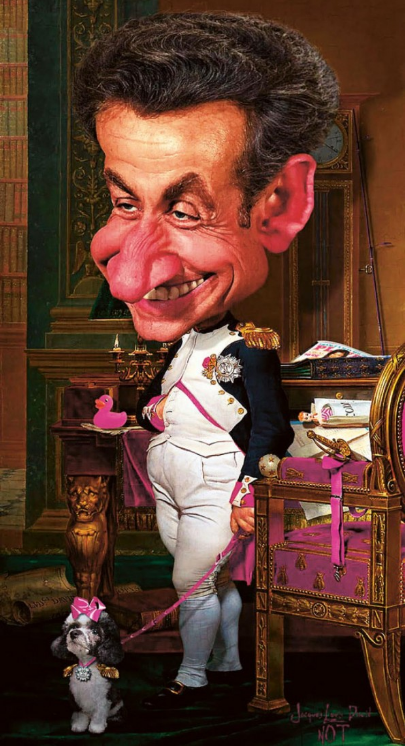
The concern is that Sarkozy will face an uphill battle to win back his own voters. Erstwhile supporters feel deceived, believing that the President has betrayed his reformist agenda. There is reason to fear that disappointment will give way to apathy at the polling stations on 22 April 2012: The passivity of rightist voters was blamed for the Socialists’ victory in the 2010 regional elections.
Sarkozy has not yet formally declared his candidacy for a second term, though no one doubts he will. The incumbent President will be challenged in April by Socialist Party candidate François Hollande, who won his party’s nomination in the 16 October primary. Hollande is the former common-law husband of 2007 Socialist Party presidential nominee Segolene Royal, with whom he has four children. The Socialist Party’s introduction of American-style election primaries – a novelty in France – has been widely commended. The reason why Socialists decided to conduct primaries this year is simple: They want to win and, in order to do so, they need to mobilize the maximum number of supporters behind a chosen candidate. Socialists might not have had any need for primaries had International Monetary Fund (IMF) President Dominique Strauss-Kahn stayed in the race. Virtually every poll had shown that Strauss-Kahn would have beaten Sarkozy to become the next president of France. Strauss-Kahn, of course, relinquished any hope of the presidency when he was arrested on charges of raping a hotel maid in New York City. Both the New York case and another attempted rape case brought in France against Strauss-Kahn have been dismissed, but the disgraced former IMF head’s political career seems permanently derailed.
Marine Le Pen poses a greater threat for Sarkozy than Socialists. Her approval rating has lately equaled Sarkozy’s, now and then either exceeding or dropping slightly below. This leader of the French far-right National Front party has done her best to distance herself from her openly xenophobic and anti-Semitic father. Her own rhetoric about Jews is carefully measured. She is an anti-globalist and considers the idea of the European Union to be unjustified. She promises France’s withdrawal from the Eurozone and restoration of the national currency. She advocates establishing exceptionally close ties with Russia. She is known as a rightist, yet at the same time advocates many socialist ideas: She is a Keynesian and champions a regulated market. Many regard these ideas as a reflection of Madam Le Pen’s pragmatism – the French fear globalization and a free market more than any other Europeans.
In French politics, the traditional line separating leftists from rightists has become increasingly blurred. Right-wing politicians often support a leftist economic course, and vice versa. Proof of this is Sarkozy himself and former Prime Minister Lionel Jospin. During the global economic crisis, the right-wing President cursed the free market and spoke of the need for government intervention while the Prime Minister, regarded as a rigid socialist, implemented wide-scale rightist economic reforms.
As it stands now, Marine Le Pen has a chance of beating Sarkozy and competing in the run-off on 6 May 2012. A precedent was set in 2002 by her father, Jean-Marie Le Pen, when he beat Lionel Jospin in the first round of elections and went on to challenge Jacques Chirac in the second round. Although Chirac was elected in the second round, the fact that Le Pen, notorious for his fascist rhetoric, came that close to the presidency shocked France and sent tremors throughout the international community.
In contrast to his domestic policy, Sarkozy’s foreign policy has wide popular support. A recent national survey – conducted by the French Institute of Public Opinion (IFOP) and published by the French weekly Paris-Match this September – shows that seventy-two percent of respondents positively assess his foreign policy.
The French President has not displayed any of his predecessors’ antipathy towards the United States; to the contrary, he is considered such an Atlantist that his critics have dubbed him the “American NeoCon with French passport.” Sarkozy does not seem to mind that soubriquet. He proudly sports a T-shirt with the inscription “NYPD” (New York Police Department) – a present from former New York City Mayor Rudy Giuliani – in front of TV cameras during his workouts.
In global affairs, Nicolas Sarkozy has tried to solve problems by cooperating with, rather than antagonizing, the United States. The Libya campaign is evidence of the French President’s ability to perform the function of a free-world leader with greater enthusiasm and vigor than the current resident of the White House. The role of global missionary has always appealed to Sarkozy, but many connect his increased prominence on the global stage with an increased need to establish his credentials as a world leader for voters in the upcoming French elections.
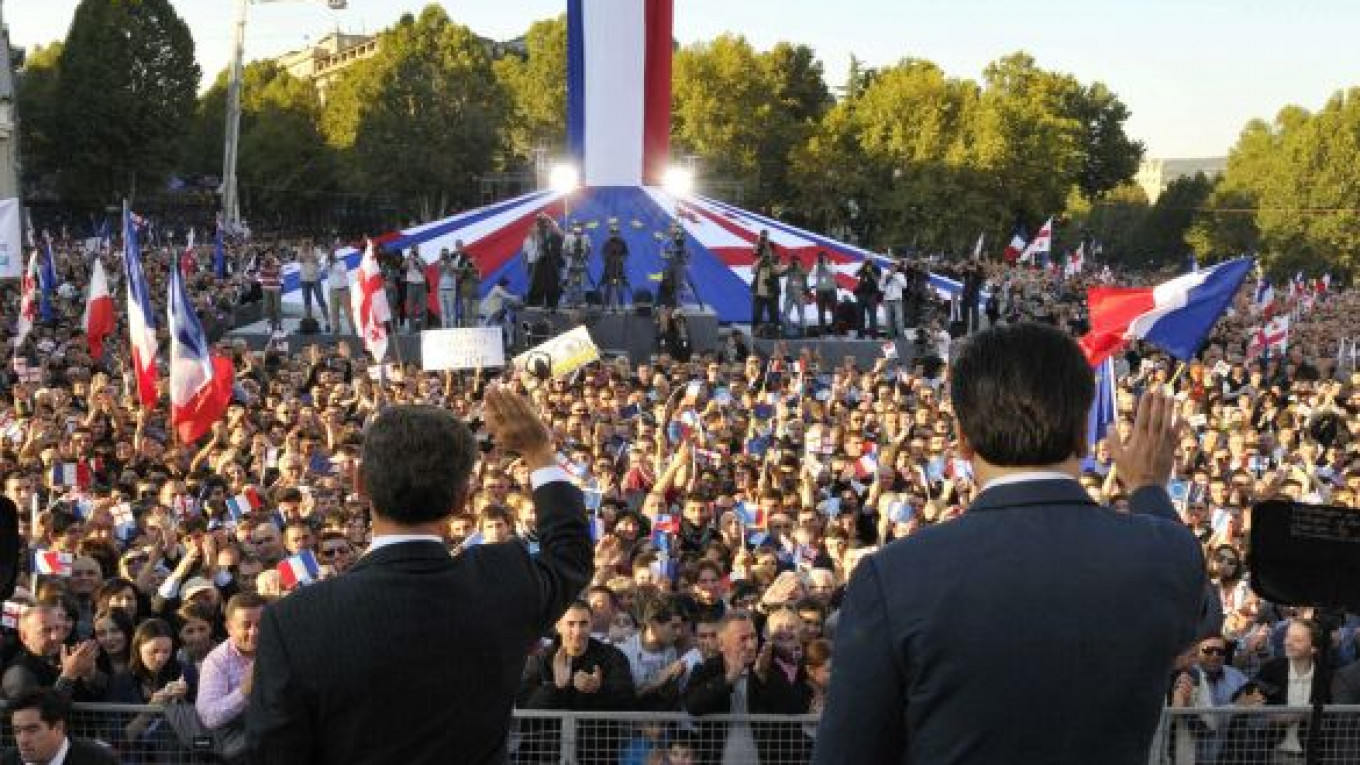
Indeed, it is clear that Sarkozy’s visit to Georgia on 7 October, as well as his visit to Libya a few weeks before, were both part of Sarkozy’s election campaign. He wants to remind his voters at home exactly who it was who saved Libya from humanitarian catastrophe and who stopped Russian tanks just outside Tbilisi. That helps to explain the format of his visit to Tbilisi – the French President chose Freedom Square as the venue for his meeting with the Georgian people and addressed the nation from the very spot where George Bush had stood back in 2005.
It is hard to say whether the image of savior of Georgian people or liberator of Libya will prove handy for Sarkozy in the upcoming French election. In any country, elections are decided on domestic issues, not foreign affairs. For Georgians, however, his visit was yet another opportunity to communicate to the world, through the French President, the message that Georgia is a free European country, that it has a sovereign right to join any alliance it chooses, and that that will definitely happen “one fine day.”
This ardent supporter of Georgia is the same politician who before the 2008 war with Russia had blocked the award of the NATO Membership Action Plan (MAP) to Georgia and who after the war sold Mistral to our Northern neighbor. Yet, here he was in Tbilisi, reminding France’s “friend and strategic partner” Russia that “the Soviet Union has been left in the past and that it cannot be replaced by the politics of manipulating spheres.” Here was the President of France calling on Moscow to keep its “word,” to fulfill the six-point ceasefire agreement, and to stop its attempts to destabilize Georgia.
To translate these good words into deeds, Nicolas Sarkozy needs, at least, to gain support of French citizens. His time for that is running out.