The first official event in the nomination process for President of the United States – traditionally the Iowa Caucus – is still three months away, but the election campaign is already in full swing. With Democratic President Barack Obama’s approval rating at an all-time low, the Republican Party is generally optimistic about its prospects for success in the 2012 presidential election.
Republicans appear to have cause for optimism – eighty-one percent of Americans are unhappy with the way the country is being run, and only about thirty-nine percent of citizens approve of President Obama’s leadership. If the presidential election were held today, Obama would lose to a generic Republican candidate, according to recent polls.
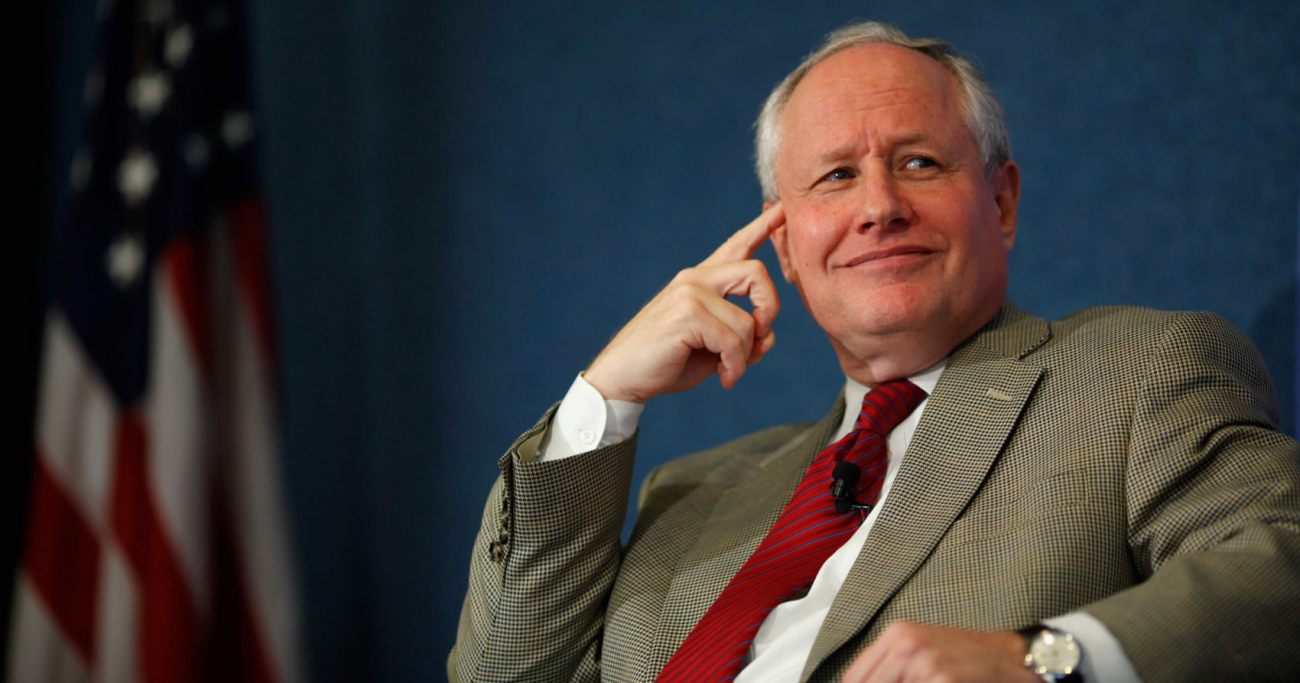
U.S. domestic and foreign policy issues were among the topics discussed with William (Bill) Kristol, the founder and editor of the conservative political magazine The Weekly Standard and a regular commentator on the Fox News Channel, in an interview conducted by Tabula magazine in late-September. Bill Kristol was chief of staff for Vice President Dan Quayle in the George H.W. Bush Administration and earlier served as chief of staff to the Secretary of Education during the Reagan Administration. Kristol is co-founder and board member of dozens of conservative organizations and is regarded as one of the chief ideologists of neo-Reaganite foreign policy.
As the son of “godfather of neoconservatism” Irving Kristol and distinguished conservative historian Gertrude Himmelfarb, a scholar of Victorian-era literature, Bill Kristol has been immersed in politics since childhood and was destined to become an influential conservative commentator.
My first question is about the upcoming U.S. elections. It’s a weird thing: Democrats are afraid that Obama will be a single-term President; on the other hand, Republicans are not overly confident of victory either, especially after Texas Governor Rick Perry’s performance in the last GOP debate. What is your take?
I think both are right. Obama is weak and is likely to be a one-term president, but the Republican field does not look as strong as it might be either. Usually elections are about incumbents rather than challengers. So I think if the Republican candidate was acceptable, he would have a pretty good chance of beating Obama. Another question is how to get a strong Republican in the field; it is hard to say.
As a Republican and a conservative, I can say that there are so many talented Republican governors, congressmen and senators – and most of them are not running for the presidential nomination. It’s a bit surprising. And still, I think Obama is likely to have quite a lot of trouble next November.
What is your take on New Jersey Governor Christie’s speech yesterday at the Reagan library? There are rumors that he might also run…
Yes, I hope he does. I think it was a pretty good speech. I mean it was general, you could not really tell details of his foreign policy or other things. As for foreign policy point of view, the Republican candidates are all being a little careful. They don’t want to sound quite as belligerent or forward-leading as former President George W. Bush. There is still a little bit of reaction to that. But, from the big-picture point of view, what’s called the Bush-McCain tradition remains stronger than people would have expected.
I mean, if you would have asked three years ago – given how the Bush presidency ended not so popular, people would have expected a much stronger reaction to that kind of forward-leading, freedom-democracy agenda. But, really, Mitt Romney, Perry, Christie and Minnesota Congresswoman Michele Bachman for that matter, they are all believers of American strength and leadership. So, I feel pretty good about that actually.
Many analysts say that the upcoming U.S. presidential election will not be about foreign policy because the U.S. is facing so many problems of its own domestically. So do you think foreign policy will be a little bit hidden from the main scene?
Yes, I think naturally there will be more focus on domestic policy because of the economy. But I think voters are pretty conscious, especially post 9/11, that they are electing a Commander-in-Chief. If you asked a poll, “What do you think is the most important issue?” they will say “Economy, economic policy.” But I think any candidate will have to pass a certain test on foreign policy.
Voters must believe that the one they vote for can lead the country. I think the case for President Obama has been more assertive, has helped him, where he has shown leadership – the Afghanistan surge, for example. When he backed off talking about the deadline to withdraw from Afghanistan and his colleagues were talking about “leading from behind,” this has actually hurt him a little bit in terms of his popularity.
Americans are, of course, peaceful people, commercial and modern people. They are not sitting around thinking, “Let’s fight wars all over the world” or “Let’s carry a burden we don’t have to.” But they are familiar with the dangers of the world, aware of America’s responsibilities around the world. So I don’t think there is a big political market for isolationism or withdrawal.
Some political commentators have been talking about erosion of solidarity in the transatlantic family. What would be your take on that?
People have been saying that for a long time, and you would be expecting that to be happening once the Cold War was over. But, actually Libya would suggest that there would be more of it than you would expect. I think Europe understands that nuclear Iran is not a good thing. But a reality also is that, like in the case of Georgia, Russian economic pressure obviously has had effect on some of the European countries.
Honestly, I do wish Europe were stronger and it is a bit unfortunate given the world we are looking at – Putin’s Russia, China and the Middle East. It would be good to have a more assertive, stronger Europe that spends more on defense and believes in a more robust foreign policy. But it’s more of a mixed bag in Europe, and we have to find some other allies to compensate, I think.
You have supported President Obama on Libya. Now that Gaddafi is gone, what should the West do? Should Europe and the United States invest in consolidating liberal democracy in Libya?
We should invest time, effort and, to some degree, money to make it a success. Like in Eastern Europe, it matters how it turns out – it’s not just getting rid of the old regime, but also having a decent one. Obviously, we should have realistic expectations.
Libya is not going to become a liberal democracy like Europe overnight. But it matters a lot if it is a pretty decent, pretty well-governed place or else chaos or Islamist regime. That really does matter to us, and we should not turn our back now that Gaddafi has been removed.
Do you think the current U.S. Administration is willing to invest in Libya?
A little bit, but not much. The good thing is that this Administration is not as bad as it could be. The bad thing is they are not really interested in taking risks and they are not interested in showing leadership. So it ends up being a weak kind of engagement. As I said, it could be worse, but it is not as strong as it could be.
The White House Administration has declared that Putin’s plan to run again for the Russian presidency in 2012 will not change the reset policy. What do you think?
I think it’s ridiculous. I mean that the reset policy was always based on wishful thinking. Now that the wishful thinking has been proven to be wishful, the Administration does not want to admit that their policy has been somewhat mistaken. They would be better if they just said, “Look, we took a reasonable gamble with the reset so that we did not give away that much.” But, instead of that, they are pretending everything is working out the way they wanted, which is ridiculous.
How would you evaluate the results of reset?
Russia is not internally liberalized, quite the contrary. You know much more about their policies toward Georgia and other neighbors. I don’t think anything is better there. They are not cooperating any more with us on any important issue. So I think there has been a lot of talk about reset, but I don’t think anything has been reset.
The current U.S. Administration has been criticized for abandoning allies. Do you think allies should feel abandoned?
“Abandoned” is maybe too strong a word. I think they have not been sufficiently careful about putting allies first. They take allies for granted, which I think sends a bad signal. I think the Republican House of Representatives has been able to check that a little bit. The reality is that, today our allies do not think that we are strong and they can count on us at every turn – and I think that’s risky.
Now that Obama has pledged to reduce military forces and withdraw from Afghanistan, what is going to happen to that country? Is it ready to take over those functions that have been performed by coalition forces?
Well, I think if Obama reduces troops gradually and ignores the deadline he himself set – September of the next year – it will be reasonable. That is the goal, of course. I don’t have a problem with reducing forces if you do it in a sober and careful way, and I am worried that Obama is so eager to get out that he is doing it too fast.
I think the Obama Administration was too quick to signal that they want to get out from Afghanistan. Such an attitude sends the wrong signal. You should be sending your friends the message that you will be there to help them and send the message to your enemies that you are not leaving. That has been the general problem with Obama’s policy. It could be more disastrous, however. Thank God, he backed off of his utopian visions of a new Middle East and even on Russia. The Administration does not admit this in respect to Russia, though I think it understands this quite well. At the same time, backing off stupid ideas is good, but it’s not enough. We are now looking at a world where a whole lot of our friends and allies are still uncertain about us and a lot of our enemies are emboldened.